
Cross-border payment infrastructure forces a decision that looks like a simple build choice but actually shapes every engineering team’s roadmap for years: do you build one abstraction layer that talks to every payment rail through a common interface, or do you integrate directly with each regional gateway and accept that each market behaves differently? Both approaches move money. The difference shows up in latency, in how reconciliation breaks at 2am, in what happens when a rail goes down in one region, and in how much engineering time gets spent on compliance plumbing instead of product work. This is a comparison of those trade-offs on their own terms, not a repeat of the data-residency or data-center questions already covered elsewhere on this Hub.
What a ‘unified’ payment gateway API layer actually abstracts away
A unified API layer sits between your application and a set of underlying payment rails: card networks, local bank transfer schemes, wallets, and sometimes crypto rails. Your application sends one request format, and the layer translates it into whatever the destination rail expects. The vendor maintains the mapping between your generic “charge” or “payout” call and SEPA, ACH, UPI, Pix, or a card network’s specific message format.
What gets abstracted is the surface area: field names, authentication schemes, retry semantics, and error codes. A declined card in the US and a failed UPI collection in India both come back to your system as some version of a standard failure object. That is genuinely useful when your engineering team is small and your market list is long, because nobody has to learn the quirks of each rail before they can ship a payment flow.

What does not get abstracted, no matter how good the vendor is, is the underlying behavior of the rail itself. A unified API can normalize the shape of a timeout, but it cannot change the fact that a bank transfer in one country clears in seconds while the equivalent transfer in another country clears the next business day. The abstraction hides interface differences. It does not hide behavioral differences, and conflating the two is where teams get surprised later.
How regional gateway integration works under the hood, rail by rail
Regional integration means your team builds and maintains a direct connection to each rail or local processor: a merchant account and API integration with a card acquirer in one region, a direct ACH or SEPA connection in another, a local wallet provider’s SDK in a third. Each integration speaks its own protocol, has its own authentication model, and exposes its own set of edge cases.

This is slower to build out market by market. It also means your team develops a real, specific understanding of how each rail fails, retries, and settles, because they are reading that rail’s documentation and handling its webhooks directly rather than through an intermediary’s normalized version. Teams doing this at scale typically end up with a thin internal adapter layer of their own, built from direct experience with each rail rather than purchased as a product. The difference from a vendor’s unified layer is that the team controls the mapping and can change it the moment a rail’s behavior changes, without waiting on a third party’s release cycle.
Latency and settlement speed: where each architecture actually wins
Latency has two separate clocks worth tracking: the time to get an authorization response, and the time for funds to actually settle. A unified API layer adds a network hop and a translation step before the request even reaches the underlying rail. For authorization, that overhead is usually single-digit to low double-digit milliseconds, which rarely matters for a checkout flow but can matter for high-volume, latency-sensitive flows like point-of-sale authorization at scale.
Settlement speed is a different story, and it is where the choice of architecture matters less than the choice of rail. A unified layer does not make a slow rail fast; it just gives you one interface to rails of varying speed. Real-time rails settle in seconds regardless of whether you reach them through a unified API or a direct integration, and legacy batch rails settle on their own schedule either way. Teams that have moved core settlement logic to real-time rails have had to change downstream operational assumptions that batch processing never forced on them, a shift covered in more detail in real-time payment settlement best practices. The architecture question is really about how much custom tuning you can apply per rail: a direct integration gives you more levers to pull on connection pooling, retry timing, and regional routing than a generic abstraction layer does.
Reconciliation and currency conversion when transactions span multiple rails
Reconciliation is where the unified layer’s convenience and its cost both show up clearly. When every rail reports through one vendor, you get one settlement file format, one set of reference IDs, and one place to look when a transaction does not match. That is a real operational win, particularly for finance teams that would otherwise be matching five different file formats against five different bank statements every day.
The cost is that currency conversion and fee structures still happen at the rail level, and the unified layer’s normalized reporting can obscure exactly where a conversion happened and at what rate. If a transaction crosses a currency boundary inside the vendor’s own infrastructure rather than at the rail, your reconciliation team needs to know that, because it changes which exchange rate and which fee schedule applies. Direct rail integration makes this visible by default, because your team is reading the rail’s own settlement report rather than a vendor’s translation of it. Either way, the reconciliation engine needs to handle multi-currency netting explicitly. Teams that skip this and assume one normalized currency field covers it end up with unexplained variances that take weeks to trace back to a single rail’s rounding behavior.
Failover: what happens when one region’s payment rail goes down
This is the scenario that decides which architecture was the right call, and it only shows up during an incident. With a unified API layer, your application has one dependency: the vendor. If the vendor’s infrastructure has an outage, every region behind it is affected even if the underlying rails themselves are fine. You get strong failover within a region, because the vendor can often reroute a declined card transaction to a backup acquirer, but you get a single point of failure across your entire payment stack if the vendor itself goes down.

With regional direct integrations, a rail outage in one market is contained to that market. Your checkout flow in other regions keeps working because it never touched the affected rail’s infrastructure. The cost is that your team has to build and test failover logic for each rail separately, because there is no vendor doing that work for you. A card rail outage needs a different fallback path than a bank transfer rail outage, and writing that logic rail by rail is real engineering time that a unified layer would have handled for you, at the cost of that shared failure domain.
The practical middle ground most mature payments teams land on is keeping at least one direct fallback path for their highest-volume markets even while using a unified layer for everything else, specifically so a vendor-side outage does not take down revenue in the market that matters most.
Compliance overhead: one abstraction layer versus per-market rules
A unified API vendor typically handles a layer of compliance work for you: PCI scope reduction, some KYC-adjacent checks, and often a license to operate as a payment facilitator in multiple jurisdictions so you do not need your own. That is a genuine reduction in regulatory surface area, particularly for a team entering its first few new markets.

What it does not remove is your own obligation to understand local rules on data handling, consumer protection, and dispute resolution, because those obligations attach to you as the merchant of record regardless of who processes the transaction. Direct regional integration puts that compliance work in front of you from day one: you negotiate the local license or partner relationship, you read the local dispute rules, and you build monitoring against the local regulator’s specific reporting requirements. It is more work up front, but it also means your compliance team develops direct, current knowledge of each market rather than trusting a vendor’s summary of it. For teams building out AML and transaction monitoring across these rails, the choice of architecture also affects how much the monitoring platform has to normalize, a consideration worth weighing against the frameworks in best AML transaction monitoring software.
The engineering cost of maintaining both approaches as you scale
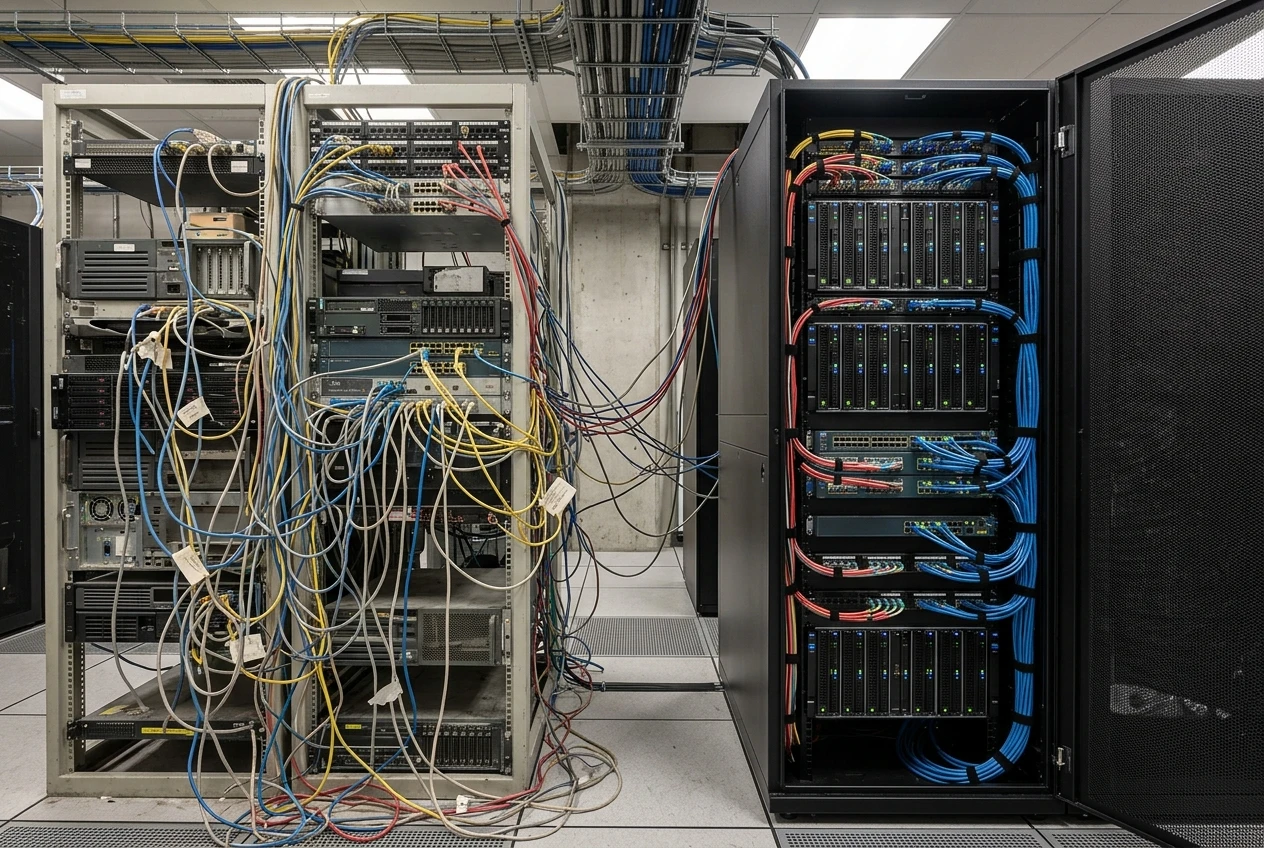
Few companies stay purely on one side of this choice as they grow. The typical path is starting with a unified layer to get into new markets quickly, then peeling off direct integrations for the highest-volume markets once the volume justifies the engineering cost of owning that connection directly. That hybrid state is the expensive part, because it means maintaining two different operational models at once: one reconciliation process for vendor-mediated rails and another for directly integrated ones, two different failover runbooks, two different sets of compliance documentation.
The engineering cost here is not the integration work itself, which is a known, bounded project. It is the ongoing cost of two mental models living in the same codebase, where a payments engineer has to know which markets are on the unified layer and which are direct before they can even start debugging an incident. Teams that scale well tend to document this split explicitly and revisit it on a schedule, rather than letting it accumulate as an unplanned side effect of whichever market happened to grow fastest.
Matching the architecture to your company’s growth stage
The right answer tracks company stage more than it tracks any abstract technical preference. Early-stage companies entering a handful of new markets get more value from a unified layer’s speed than they lose from its shared failure domain, because the volume at risk during an outage is still small. Companies with concentrated volume in one or two high-value markets get more value from a direct integration in those specific markets, because the cost of an outage or a mispriced currency conversion scales with volume, and the engineering cost of owning that integration directly becomes worth paying.
The decision is not permanent, and it does not have to be uniform across every market at once. Treating it as a per-market choice, revisited as volume and risk change, keeps the engineering cost proportional to what each market actually earns.
If your team is weighing this decision for an active market expansion, mapping the volume, outage risk, and compliance load of each candidate market against both architectures before committing engineering time is the step worth taking before any code gets written.