

Most founders treat compliance as a locked door they have to get through before launch day, then forget about once they’re through it. That’s backwards, and it’s expensive. Compliance isn’t a single gate. It’s a set of obligations that show up in a specific order, tied to specific milestones: the day you pick a business model, the day you onboard your first customer, the day you cross a growth threshold that triggers new reporting. Treat it as one overwhelming checklist and you’ll either freeze before launch or get blindsided six months in. Map it to your actual stages, and you’ll know exactly what to solve now and what can genuinely wait.
This roadmap walks through five stages: choosing a regulatory path based on your business model, licensing before you touch customer money, building KYC and AML into onboarding, handling data and security obligations as you scale, and keeping up with ongoing reporting. It closes with a note on when outside compliance counsel earns its cost and when it doesn’t.
Why Compliance Can’t Wait Until After You Launch
A payments app that launches without a money transmitter license isn’t fixing a paperwork gap later. It’s operating illegally in whatever states or countries it touched, and the fix usually means pausing the product, refunding users, and reapplying, which costs far more in time and money than getting it right the first time.
The deeper problem is that compliance decisions shape your product. If you build your onboarding flow, your data architecture, and your fee structure before you know what licensing regime applies to you, you may have to rebuild core pieces of the product to match requirements you didn’t know existed. A roadmap that sequences compliance work against your actual build stages prevents that kind of rework, and it tells you which obligations are urgent now and which ones you can plan for without acting on yet.
Stage One: How Your Business Model Decides Your Regulatory Path
The first compliance decision isn’t a filing. It’s a question: what does your business actually do with a customer’s money?

A company that only moves data, like a budgeting app that reads account balances through an open banking connection, faces a different regulatory path than a company that holds customer funds, issues cards, or facilitates transfers between parties. Lending products answer to different rules than payments products. Crypto custody answers to a different set again. The business model determines which regulator has a claim on you, and that claim determines everything downstream: what licenses you need, what disclosures you must give customers, and what your reporting obligations will look like once you’re live.
This is also the stage to decide whether you’re building the regulated function yourself or renting it. Many early-stage fintechs partner with a bank or an existing licensed program manager rather than becoming a licensed entity themselves. That choice trades speed for control: you launch faster, but you inherit the partner’s compliance requirements and their risk appetite. Map out which parts of your product touch regulated activity directly, and which parts could sit on top of a partner’s existing license. That single decision will shape your timeline more than anything else in this list.
Stage Two: Licensing and Registration Before You Touch Customer Money
Once you know your business model’s regulatory category, the next question is which licenses or registrations you need before a single dollar of customer money moves through your platform.
For many fintechs operating in the United States, this means money transmitter licenses at the state level, which can mean filing in dozens of jurisdictions with different timelines and different fees. For lending products, it means state lending licenses or compliance with usury limits. For products touching securities or investment advice, it means registration with the relevant securities regulator. For crypto products, it can mean a mix of money transmission rules and state-specific virtual currency licensing.

A few practical points for this stage:
-
Licensing timelines run long. Some state money transmitter licenses take months to approve, so this work needs to start well before your target launch date, not alongside it.
-
Geographic scope matters more than most founders expect. Launching nationwide means licensing nationwide. Launching in a handful of states first, then expanding, is a common and defensible way to get to market faster.
-
A bank partnership or a licensed program manager can let you operate before you hold your own license, but read the partnership agreement closely. These arrangements often come with restrictions on what features you can launch and how fast you can change your product.
The mistake to avoid here is treating licensing as a box to check once. Licenses come with ongoing conditions, capital requirements, and reporting obligations that follow you for the life of the business, which is why this stage connects directly to stage five.
Stage Three: Building KYC and AML Into Onboarding From Day One
Once you’re licensed to touch customer money, the next obligation arrives immediately: you have to know who your customers are before you let them transact.
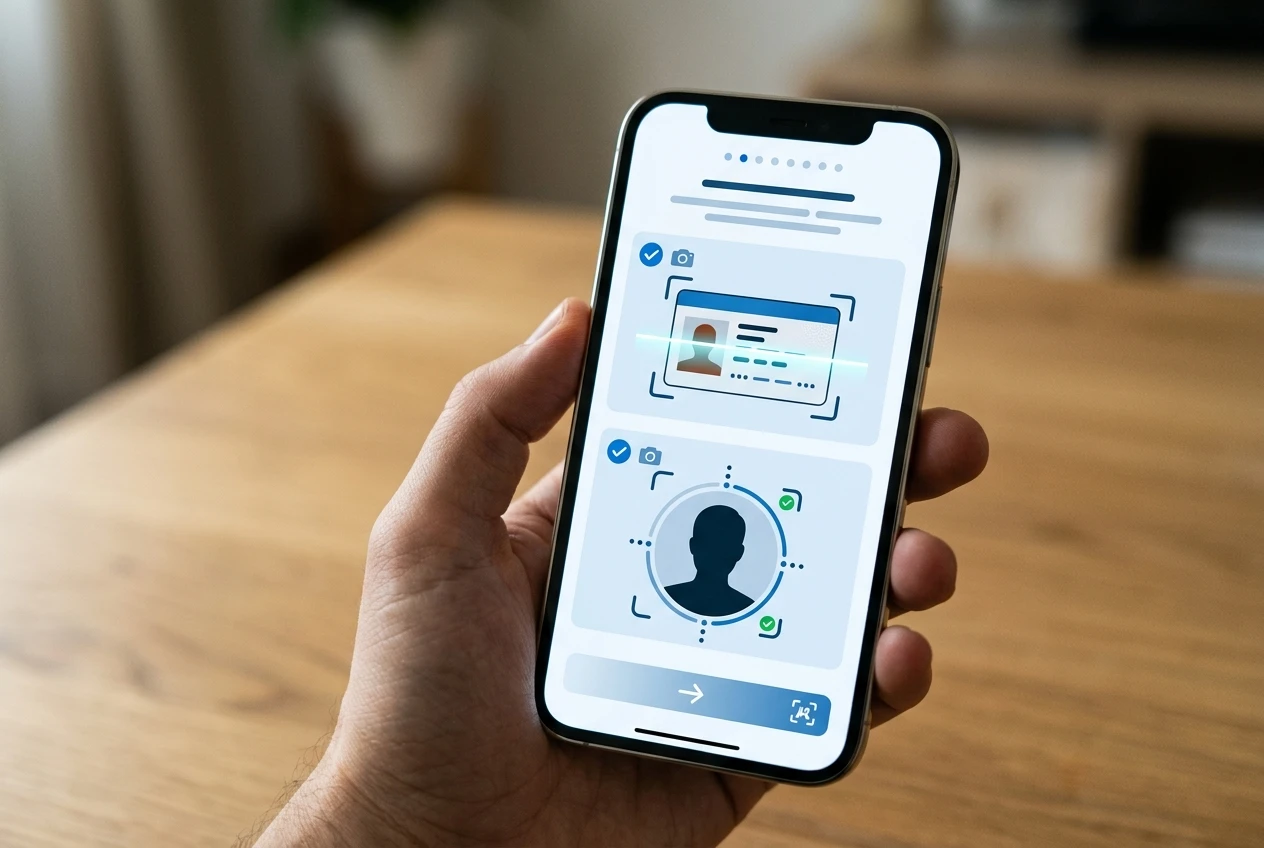
Know Your Customer and Anti-Money Laundering requirements aren’t optional add-ons you bolt onto onboarding after launch. They’re structural. Your onboarding flow needs to collect identity information, verify it against reliable data sources, screen customers against sanctions and watch lists, and flag patterns that suggest fraud or money laundering, all before or very shortly after a customer’s first transaction.
Building this in from day one matters for two reasons. First, retrofitting KYC into an onboarding flow that was designed without it usually means redesigning the entire signup experience, which means re-earning trust from users who already got used to something simpler. Second, regulators expect your AML program to be risk-based and documented from the start. A program you assembled after your first regulatory exam is a program that looks reactive, and reactive compliance programs draw more scrutiny, not less.
This is also where fraud detection connects directly to compliance. The same transaction monitoring that satisfies AML requirements can catch the kind of suspicious activity that rule-based fraud systems miss, which is worth understanding in more depth if you’re deciding how much of this to build versus buy. Machine learning approaches to fraud detection are increasingly the backbone of transaction monitoring programs, because they adapt to new fraud patterns faster than fixed rule sets.
Practically, most early-stage fintechs don’t build KYC and transaction monitoring from scratch. They integrate a third-party identity verification provider and a sanctions screening tool, then layer their own risk rules on top. That’s a reasonable approach at this stage. What can’t be outsourced is the underlying AML policy itself, the written program that explains how your company identifies risk, escalates suspicious activity, and reports it. That document is yours to own, and examiners will ask for it.
Stage Four: Data Privacy and Security Obligations as You Scale
As your user base grows, the compliance center of gravity shifts from “who is this customer” to “how are we protecting what we know about them.”
Data privacy law gets more demanding as you grow, not less. Depending on where your customers live, you may face obligations under state privacy laws, GDPR if you have European users, or sector-specific rules that apply to financial data specifically. These laws typically require you to disclose what data you collect, give users a way to access or delete it, and notify regulators and affected users within a specific window if you suffer a breach.

Security obligations run alongside privacy ones, and at this stage they stop being a developer’s concern and become a board-level one. Scaling means more customer records, more employees with system access, more third-party integrations, each one a potential point of failure. A security architecture that worked for ten thousand users doesn’t automatically hold for a million, and most of the real work in this stage is revisiting assumptions you made early, before you had reason to think about them carefully. If you haven’t audited how your application’s authentication, encryption, and access control layers hold up under real scale, a closer look at fintech app security is worth the time before a regulator or an incident forces the question.
A few specific triggers worth watching for as you scale:
-
Crossing a certain number of users or revenue in a state can trigger state privacy law obligations you weren’t subject to before.
-
Adding new data-sharing partnerships, especially anything that touches open banking connections or third-party data aggregators, adds new consent and disclosure requirements.
-
Expanding into a new country usually means a new privacy regime entirely, not just a translated version of the one you already comply with.
Stage Five: Ongoing Reporting, Audits, and Keeping Up With Regulatory Change
Compliance doesn’t end at launch. It becomes a recurring operational cost, and founders who don’t plan for that underestimate both the cash and the headcount compliance will eventually require.
Licensed fintechs typically face regular reporting obligations: periodic filings to state regulators, suspicious activity reports when AML monitoring flags something real, and financial reporting tied to capital requirements if your license includes them. Many also face periodic examinations, where a regulator reviews your compliance program directly, asks for records, and can require corrective action if they find gaps.

Regulatory change is the other constant. Rules around crypto, open banking, and data privacy are still actively evolving in most jurisdictions, and a compliance program built for the rules as they stood at launch can fall out of date within a year or two. Budget for a recurring compliance review, not a one-time setup. That might mean a quarterly check against new state and federal guidance, or a standing relationship with counsel who flags relevant changes as they happen.
The founders who handle this stage well tend to treat compliance reporting as a product requirement with its own roadmap, not an afterthought that gets handled manually by whoever has time. Building reporting and audit trails into your systems from the start, rather than reconstructing them after a regulator asks, saves real time when an examination actually arrives.
When to Bring In Outside Compliance Counsel, and When Not To
Outside compliance counsel earns its cost at specific moments: when you’re deciding your initial licensing strategy, when you’re entering a new jurisdiction, when a regulator contacts you directly, or when you’re structuring a bank partnership agreement. These are moments where a mistake is expensive and hard to reverse, and a few hours of expert review can prevent months of rework.
Counsel is less necessary for the operational, day-to-day pieces: running the KYC verification checks, maintaining transaction monitoring, or keeping internal documentation current. Those tasks are better handled by an in-house compliance hire or a well-chosen vendor, once you can afford one, because they require constant attention rather than periodic judgment calls.
The general rule: bring in outside counsel for decisions with long-term structural consequences, and build internal capability for the repeated work. Trying to run everything through outside counsel gets expensive fast, and trying to handle structural licensing decisions without expert input gets expensive in a different, worse way.
If you’re weighing which compliance tools or legal partners to bring in first, our fintech solutions overview is a useful next stop.