
A password only proves that someone typed the right string of characters. It does not prove who typed it, where they were, or whether they were coerced into handing it over. Every credential stuffing attack, every phishing kit, every leaked database from a breach that had nothing to do with your product works because the password sitting on your login screen is interchangeable with a million others sitting in criminal marketplaces. For a fintech app moving real money, that gap between “correct password” and “correct person” is where most account takeover losses originate.
Biometric authentication closes part of that gap by checking something a credential stuffing script cannot replay: a physical trait or a behavior pattern tied to one person’s body. It is not a replacement for every other control in your stack, but for the specific job of verifying identity at login and at the moment of a transfer, it does something a password structurally cannot. The question for a founder or product manager is not whether to add biometrics, most competitors already have, but which method to use, at which point in the user journey, and what obligations kick in the moment you start storing this data.
Why the password is the weakest link in fintech security
The password problem is not that users pick bad ones, though they do. It is that a password is a shared secret, and shared secrets leak. They get reused across sites, phished through fake login pages, and sold in bulk after breaches at companies with no connection to your app. Multi-factor authentication helps, but SMS codes get intercepted through SIM swaps and one-time codes get phished through real-time relay attacks almost as easily as passwords themselves.
Biometric authentication changes the shape of the problem. Instead of asking “do you know the secret,” it asks “are you the physical person this account belongs to.” A fingerprint or a face cannot be guessed from a dictionary, cannot be reused across ten different accounts by a human who got lazy, and cannot be emailed to a fraudster by a panicked user responding to a fake support call. That does not make it unbeatable, more on that below, but it removes an entire category of attack that depends on secrets traveling through channels a criminal can intercept.
Fingerprint and face recognition: what the device is actually checking
Fingerprint and face recognition in most fintech apps do not happen on your servers at all. They happen on the user’s device, through Touch ID, Face ID, or Android’s biometric APIs, and your app only receives a yes or no answer plus a cryptographic token confirming the device unlocked successfully. This matters for both security and liability: in most consumer mobile implementations, you are not the one storing or comparing the raw biometric data, the device manufacturer’s secure hardware enclave is.
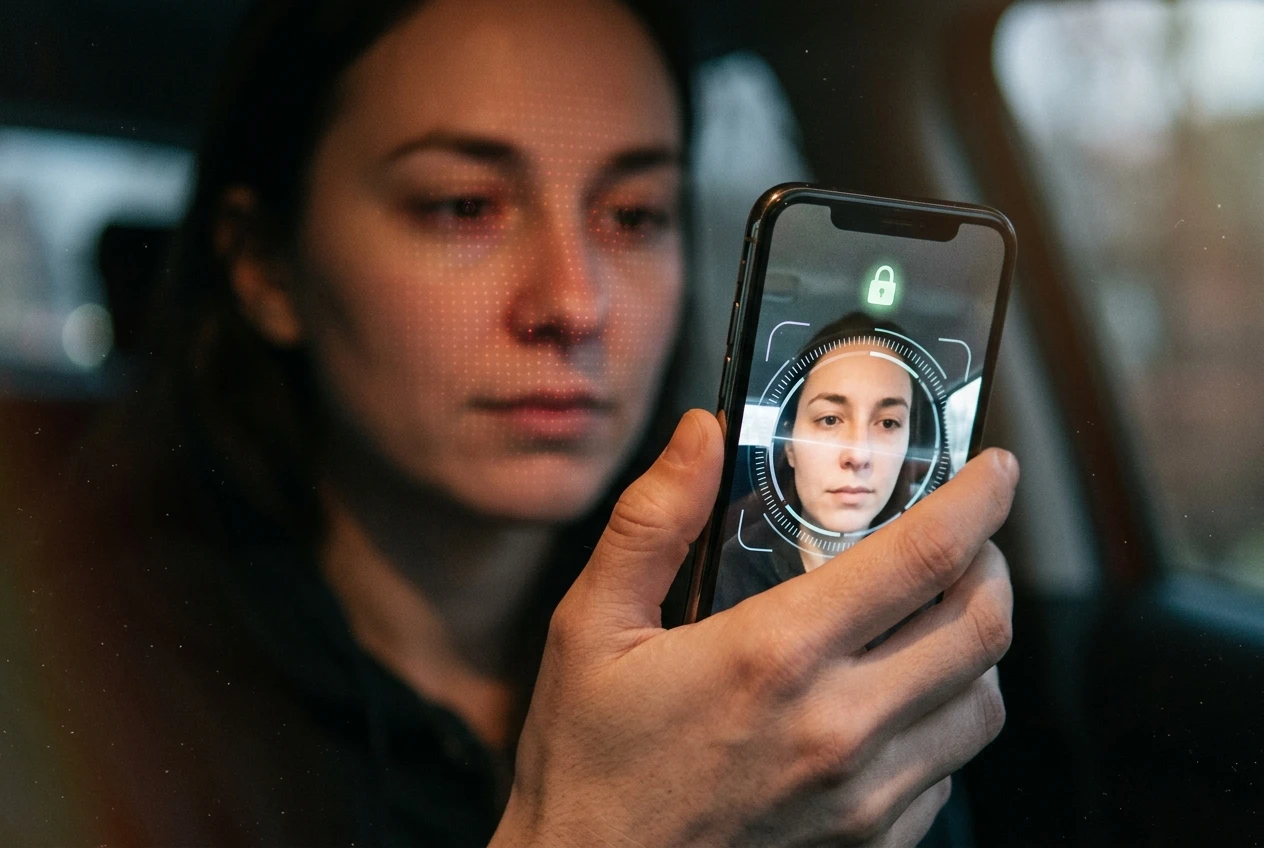
A fingerprint sensor is checking ridge patterns against a template stored in the enclave. A face scan, on the better implementations, is checking a depth map built from infrared dot projection, not just a flat photo comparison, which is why a printed picture of someone’s face does not fool Face ID but did fool early face-unlock systems on budget Android phones. The device is answering a narrow question: does the biometric input match the template enrolled on this specific device. It is not answering “is this person who they claim to be” in any global sense, which is why fintech apps still need a separate identity verification step during onboarding, before any biometric gets tied to an account.
For onboarding, where there is no existing device-bound template to check against, many fintechs use server-side face matching, comparing a live selfie against a photo ID. That is a different architecture with different data-handling obligations than device-based login, and the distinction matters for the compliance section below.
Behavioral biometrics: the authentication layer running in the background
Fingerprint and face checks are discrete events: the user acts, the system responds. Behavioral biometrics work differently. They run continuously, scoring how someone types, how they hold their phone, the angle and pressure of their swipes, the speed and rhythm of their navigation through the app, against a baseline built from that user’s own prior sessions.
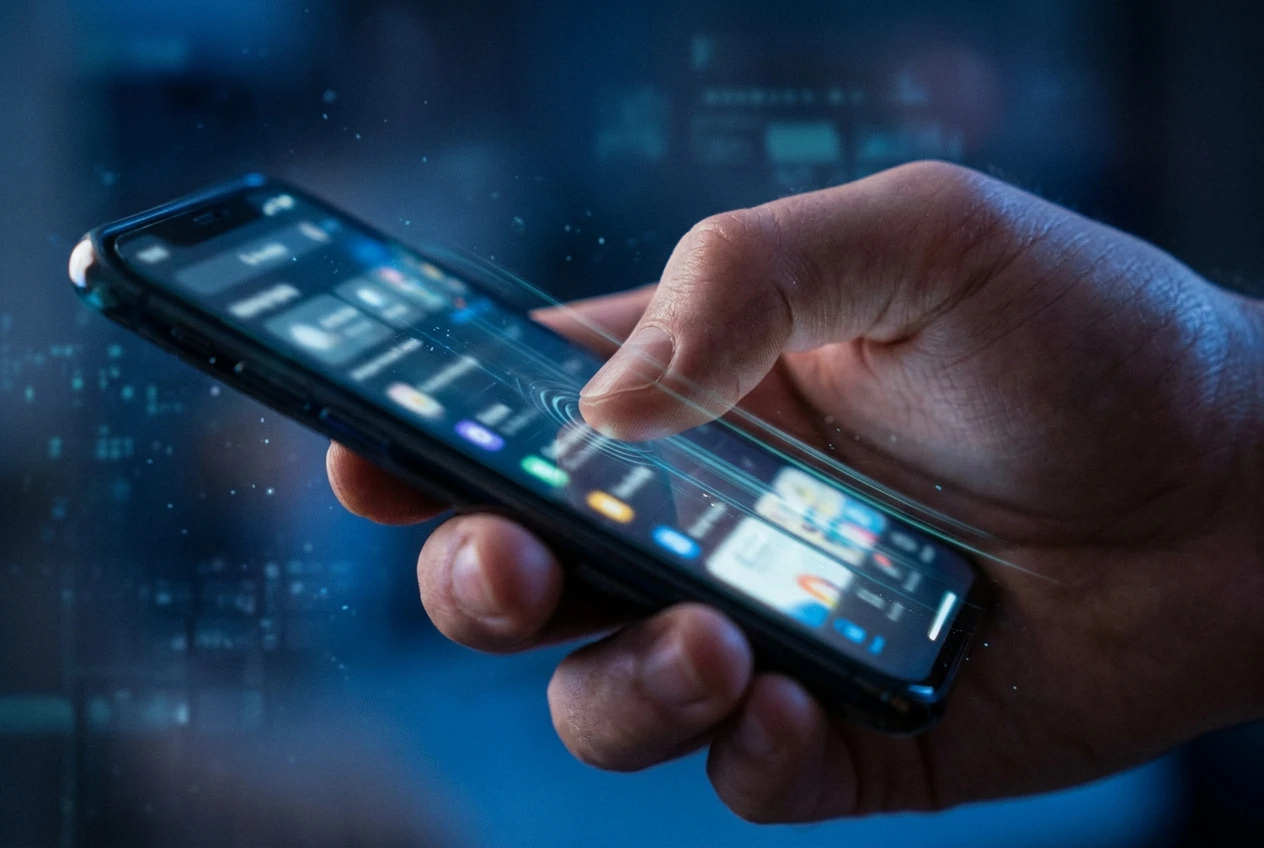
None of this requires the user to do anything. There is no prompt, no extra tap, which is exactly the point. Behavioral biometrics are built to catch the moment a session looks wrong after login has already succeeded, when a fraudster is operating inside an account using a stolen password and a correctly unlocked device, or when a remote access scam has a victim unknowingly handing control to someone else mid-session. A sudden shift from a fast, confident typing cadence to slow, hesitant input, or a transaction flow that skips screens a real user always lingers on, can trigger a step-up challenge or a hold on a transfer without the legitimate user noticing anything changed.
The tradeoff is that behavioral biometrics are probabilistic, not binary. They produce a risk score, not a match or no-match, which means they work best layered behind fingerprint, face, or password checks rather than replacing them outright.
Deepfakes, spoofing, and the liveness detection arms race
Every biometric method above has a known spoofing attempt, and the countermeasure for each is liveness detection, confirming that the input comes from a live person present at the point of capture rather than a replay, a mold, or a synthetic image.
Fingerprint sensors have faced silicone mold attacks and, in research settings, 3D printed fingerprints lifted from latent prints on glass. Capacitive sensors that check for the electrical properties of living skin, not just ridge shape, close most of that gap, but cheaper sensors in lower-cost devices remain more exposed.
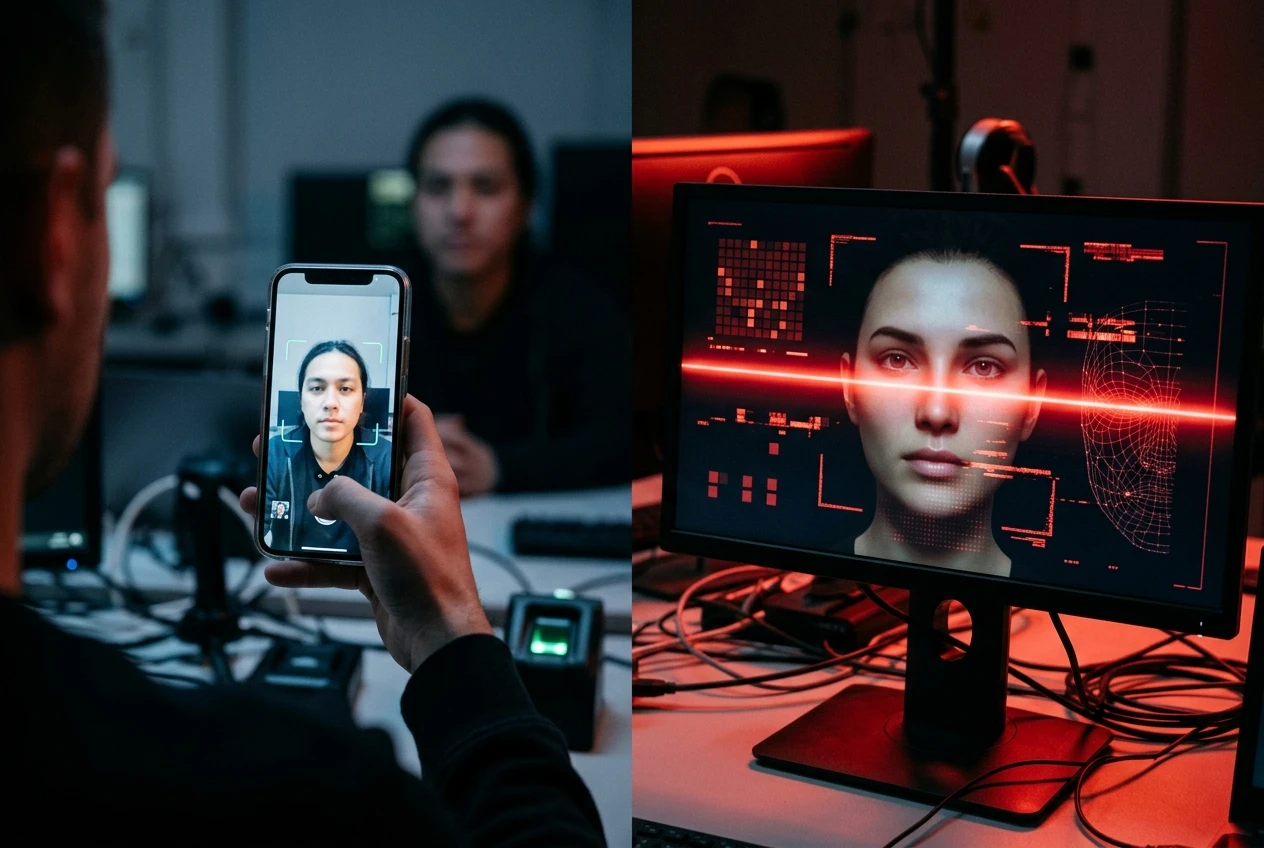
Face recognition is the method under the most active attack right now, because generative AI has made convincing synthetic video cheap to produce. A deepfake video played back to a camera during a liveness check, or injected directly into the video stream through virtual camera software, can in some cases beat face matching systems that only check for a plausible face rather than verifying genuine liveness. The stronger implementations ask for a specific, unpredictable action, turning the head a random direction, blinking on cue, and analyze depth and texture data that a flat video replay cannot reproduce. Weaker ones, particularly older systems built before deepfake generation became accessible, are the ones getting bypassed in fraud reports.
This is an arms race, not a solved problem. Liveness detection that was adequate two years ago is not automatically adequate now, and any founder evaluating a biometric vendor should ask specifically how recently their anti-spoofing models were updated against current generative AI techniques, not just whether liveness detection exists as a checkbox feature.
What happens legally once you store a fingerprint or face scan
Biometric data carries legal weight that a password does not, because a password can be reset and a fingerprint cannot. Several US states, Illinois’s Biometric Information Privacy Act being the most litigated, require specific informed consent before collecting biometric identifiers, impose retention and destruction schedules, and allow private lawsuits for violations, which has produced large settlements against companies that got consent or disclosure wrong. The EU’s GDPR classifies biometric data used for identification as a special category requiring explicit consent and a documented legal basis, with stricter breach notification consequences than ordinary personal data.
The practical implications for a fintech product team are specific. If biometric matching happens entirely on-device through the phone’s secure enclave, with your servers only receiving a success token, you may fall outside the heaviest of these obligations because you never actually possess the biometric data. If you run server-side face matching for onboarding, or store fingerprint templates on your own infrastructure for any reason, you are now a custodian of biometric data and need documented consent flows, a retention and deletion policy, and encryption standards that your legal and compliance team should sign off on before launch, not after. This sits alongside the broader compliance obligations every fintech already carries; if you have not mapped out what applies at your current stage, the fintech compliance roadmap for startups covers what to handle when.
Matching the method to the moment: onboarding, login, and high-risk transfers
No single biometric method covers every point in the user journey well, and trying to force one to do so usually means picking the wrong tool for at least one job.
-
Onboarding: server-side face matching against a government ID, with active liveness detection, is the current standard for proving a new user is who their documents say they are. This is the one place biometric data is likely to touch your servers directly, so it is where the data-handling obligations above matter most.
-
Routine login: device-based fingerprint or face unlock, which keeps the biometric template on the user’s hardware and gives you only a pass or fail signal, covers most day-to-day authentication without your app taking on custody of sensitive data.
-
High-risk actions: large transfers, new payee additions, or changes to account recovery details warrant a step-up challenge, combining a fresh device-based biometric check with behavioral risk scoring, so a session that looks anomalous gets an extra verification gate before money actually moves.
Getting this layering right is less about picking the most advanced method and more about matching friction to risk: light-touch verification for routine actions, heavier verification for the moments where a mistake is expensive.
Biometric authentication is one piece of how a fintech app defends its users, and it works best alongside the encryption, access controls, and monitoring that cover everything else in the stack. For how it fits into that fuller picture, see Securing Your Fintech Application: The Layers That Actually Matter.