
Both stablecoins and central bank digital currencies promise a version of money that moves at internet speed. That similarity ends almost immediately once you ask who stands behind the balance in your wallet. A stablecoin is a liability of a private company. A CBDC is a liability of a government. Those two sentences carry almost everything you need to know about the risks, the privacy trade-offs, and the practical differences between them, and the rest of this piece works through what that actually means in 2026.
What Problem Each One Is Actually Trying to Solve
Stablecoins were built to solve a crypto problem first: traders needed a way to hold value on-chain without cashing out to a bank account every time the market got volatile. That use case expanded into cross-border payments, remittances, and dollar access for people in countries with weak currencies or capital controls. A stablecoin, in practice, is a private company’s promise to redeem a token for a dollar, backed by reserves it holds and discloses on some schedule.
A central bank digital currency solves a different problem. Central banks want a digital form of cash that carries the same legal status as a banknote, issued directly by the state rather than by a commercial bank. Some are reacting to falling cash use. Some want a domestic payment rail that doesn’t depend on private card networks. Some, particularly in emerging markets, want a tool for faster government disbursements and broader access to formal banking for people who don’t have a bank account at all.
The overlap is real: both aim to make moving money cheaper and faster than the systems most people grew up with. But one is a product built by a company that needs the arrangement to be profitable or at least sustainable, and the other is infrastructure built by a state that needs the arrangement to be controllable.
Who Controls the Money: Private Issuers vs Central Banks
With a stablecoin, control sits with the issuing company. That company decides what backs the token, which addresses can be frozen, which jurisdictions it will serve, and whether it will comply with a request from a law enforcement agency to block a specific wallet. Several major stablecoin issuers have frozen addresses tied to sanctioned entities or hacks in the past, which tells you the “decentralized” label on a stablecoin usually applies to where it moves, not to who can stop it moving.

With a CBDC, control sits with the central bank and, depending on the design, with the commercial banks the central bank chooses to route it through. A CBDC can be built as a direct claim on the central bank, held in a wallet the government can see, or as a two-tier system where commercial banks still handle the customer relationship while the central bank handles settlement underneath. Either way, the rules on transaction limits, holding caps, and who gets access are written into the system by policymakers, not by a product team answering to shareholders.
The practical difference for a user is accountability. A stablecoin issuer answers to its regulators, its auditors, and ultimately its own balance sheet. A central bank answers to a legislature, a currency mandate, and monetary policy objectives that have nothing to do with your convenience. Neither of those is “no one is in charge.” It’s a choice between a corporate controller and a sovereign one, and the two behave differently under stress.
Backing and Failure: What Happens If It Breaks
This is the question that actually matters if you’re holding either one.

A stablecoin’s peg depends entirely on its reserves and on the issuer’s willingness and ability to honor redemptions. Regulation introduced since 2023 in major markets has pushed issuers toward holding reserves in cash and short-term government securities rather than riskier assets, and toward publishing attestations more frequently. That has reduced the odds of a repeat of the algorithmic stablecoin collapses seen earlier in the decade, where the “stability” mechanism was a second token with no real backing at all. But a reserve-backed stablecoin can still fail if the issuer mismanages reserves, if a bank holding those reserves fails, or if a run on redemptions happens faster than the issuer can liquidate assets. When a stablecoin breaks, you are an unsecured creditor of a private company, standing in whatever line bankruptcy law puts you in.
A CBDC removes that specific failure mode. It is a direct liability of the central bank, and a central bank that issues its own currency cannot become insolvent in the way a company can, because it can always create more of its own currency to meet its own liabilities. That does not mean a CBDC is risk-free. It carries the risks of the currency itself, meaning inflation, capital controls, or a government simply changing the rules on how much you can hold or spend. The risk moves from “will the company have enough reserves” to “what will the government decide to do with the system it fully controls.”
So the honest comparison isn’t safer versus riskier in a simple sense. It’s issuer risk versus state risk. A reader deciding between the two is really deciding which kind of institution they trust more to behave predictably with their money.
Privacy and Surveillance: The Real Difference
This is where the two diverge most sharply, and where most of the public debate actually lives.

A stablecoin transaction on a public blockchain is pseudonymous by default. Your wallet address isn’t your name, but the entire transaction history tied to that address is permanently visible to anyone who looks, and increasingly to blockchain analytics firms that specialize in connecting addresses to real identities through exchange records and subpoenas. Privacy here is a matter of obscurity, not protection, and it degrades the moment you move funds to or from a regulated exchange that knows who you are.
A CBDC’s privacy profile depends entirely on design choices made by the issuing central bank, and those choices have varied a lot across the pilots running in 2026. Some designs route transactions through commercial banks that already hold your identity and transaction data, which is functionally similar to the banking system today. Other designs give the central bank itself visibility into every transaction, which is a meaningfully different situation: a single institution with a complete, permanent ledger of how a citizen spends money, with the technical ability to flag, restrict, or block spending by category if the law were ever changed to allow it. That capability has been the central objection raised by privacy advocates and some lawmakers in markets where CBDC pilots have slowed or stalled.
Neither system has solved this cleanly. The useful distinction for a reader is that stablecoin privacy erodes through third-party analysis and legal process, while CBDC privacy is a design decision made upfront by the one institution with the least incentive to limit its own visibility.
Where Things Stand in 2026: Pilots, Launches and Pullbacks
The regulatory and institutional picture has moved fast. Major stablecoin regulation has taken effect in the US and the EU, requiring licensed issuers, regular reserve disclosures, and in some cases direct supervision by banking regulators rather than treating stablecoins as an unregulated crypto product. That has pushed smaller or less transparent issuers out and concentrated volume with a handful of large, compliant players.

On the CBDC side, the picture is mixed. A number of countries have moved retail CBDC pilots into limited live use, particularly in parts of Asia and Africa where financial inclusion is a stronger driver than it is in wealthier markets. Other major economies have slowed or paused retail CBDC work after public pushback specifically over the surveillance question, while continuing to develop wholesale CBDC systems used only between banks and the central bank, which carries a much smaller privacy footprint because ordinary consumers never touch it directly.
The practical upshot for 2026: stablecoins have grown into a regulated, usable payment tool for consumers and businesses in a way that feels close to mainstream. Retail CBDCs remain mostly experimental in the markets most readers of this article live in, even where wholesale CBDC infrastructure is already running quietly in the background of the banking system.
What This Means for Your Wallet and Your Business
If you hold stablecoins today, you’re relying on a private company’s reserve management and its compliance with regulation that is still relatively new and still being tested by real redemption events. Checking which reserves back a stablecoin, how often they’re attested, and what jurisdiction the issuer is licensed in isn’t a technical exercise, it’s the same due diligence you’d apply to any company holding your money.
If a retail CBDC becomes available where you live, the decision isn’t really about yield or convenience, since a CBDC typically won’t pay interest and isn’t designed to compete on features. It’s about whether you’re comfortable with a direct, traceable relationship with the central bank for everyday spending, versus routing that spending through a commercial bank or a private stablecoin issuer the way you already do.
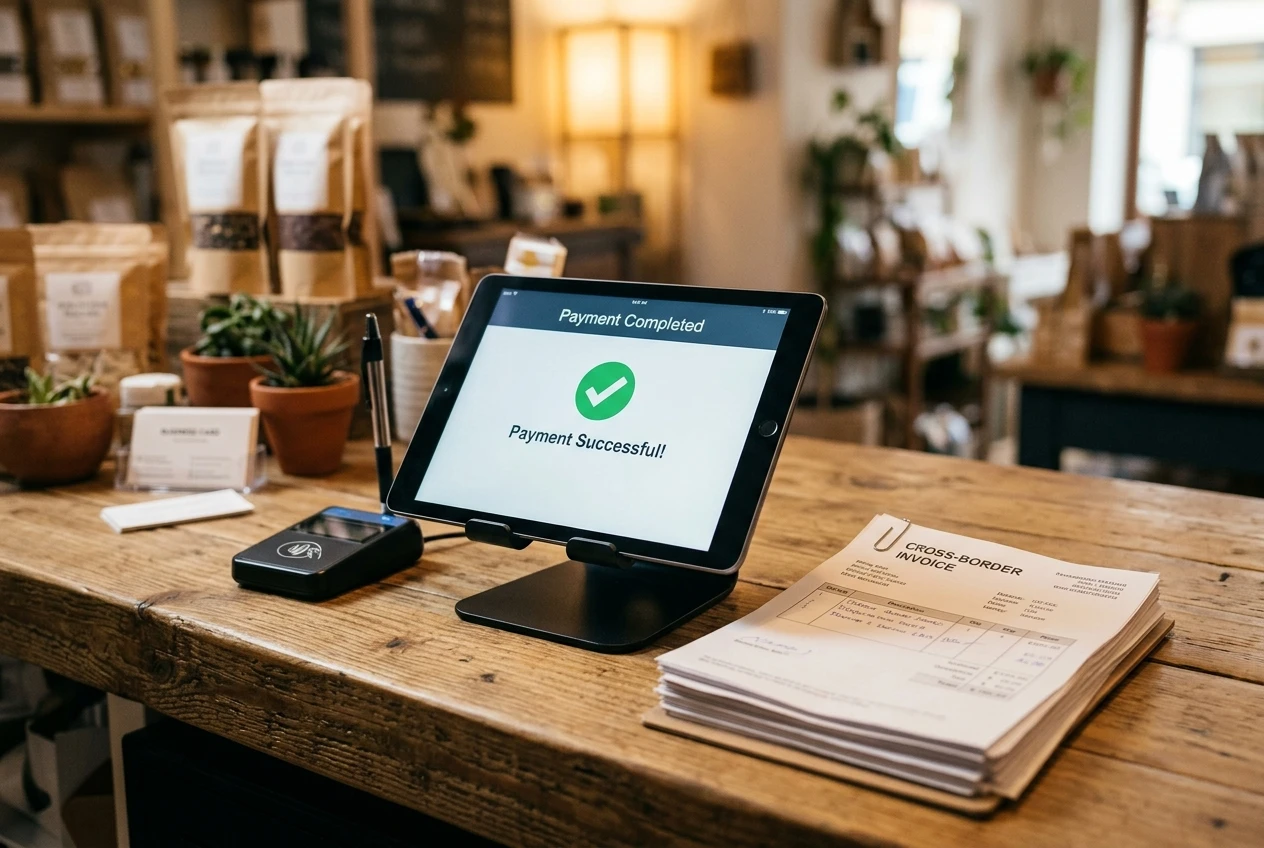
For a business accepting payments, stablecoins already offer lower settlement costs and faster finality than card networks in many cross-border cases, and that’s available now rather than hypothetically. A CBDC-based business payment rail, where it exists, offers similar speed but with the central bank itself as a counterparty, which changes the compliance conversation in ways a business owner should understand before building around it.
Which One Is More Likely to Win You Over
Neither one is a universal answer, and the honest version of this comparison is that they’re likely to coexist rather than one replacing the other. Stablecoins will keep serving people who want dollar or euro exposure without a bank, fast settlement for crypto-native businesses, and a bridge currency for cross-border transfers. CBDCs will keep developing mainly as wholesale infrastructure between banks, with retail versions arriving unevenly depending on how much a given government prioritizes financial inclusion against the privacy objections it keeps running into.
Which one wins you over personally comes down to a single question: do you trust a regulated private company’s balance sheet more than you trust your government’s restraint with a complete transaction ledger. Reasonable people land on different sides of that, and the answer may differ by country and by how much you’re actually moving.
For a wider view of where digital money as a whole is heading, including the payment rails and wallet technology sitting underneath both stablecoins and CBDCs, see this Hub’s broader look at the future of digital payments.