
Fraud detection architecture decisions used to come down to a fairly simple question: which model catches more fraud. That question still matters, but it is no longer the one that determines whether a system survives contact with production. A model that catches an extra two percent of fraud but adds 300 milliseconds to checkout latency will get overruled by the payments team before it ever reaches a steering committee. The real decision now sits at the intersection of detection accuracy, inference speed, infrastructure cost, and the ability to explain a decline to a regulator who is asking why a legitimate customer got blocked. This piece evaluates traditional machine learning against real-time neural networks for fraud detection on those terms, not on a abstract accuracy leaderboard.
Why latency changes the fraud detection calculus
A fraud model that scores a transaction after the payment has already settled is doing forensics, not prevention. Most card-present and card-not-present authorization flows give a scoring engine somewhere between 50 and 300 milliseconds before the issuer or acquirer times out the request. That window has to include feature retrieval, model inference, and any downstream orchestration logic, not just the math.
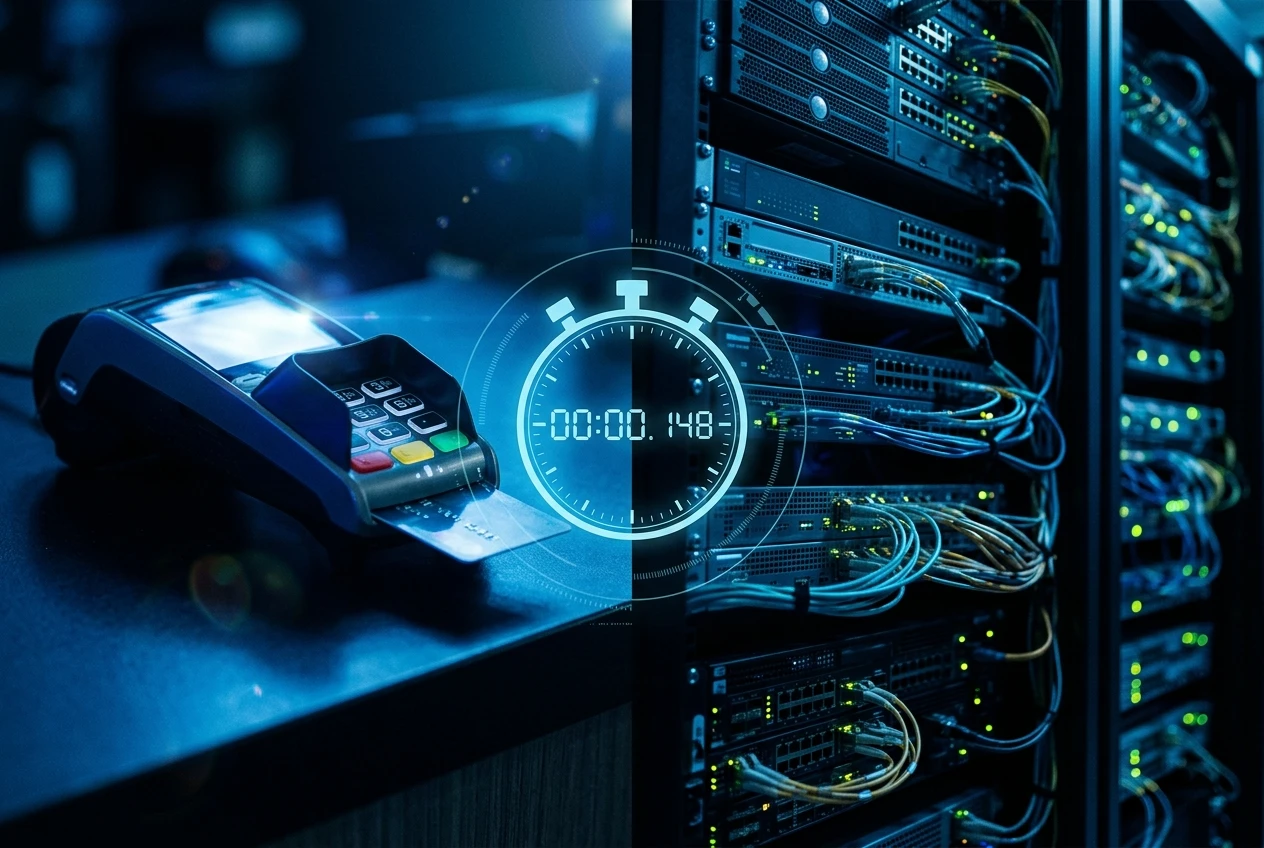
This constraint re-orders the evaluation criteria. A model that would score highest on a held-out dataset in a research paper can still be the wrong choice if it cannot return a score inside the authorization window at the transaction volume the business actually runs. Throughput under load, not just raw accuracy, decides whether an architecture is viable. A payment processor running tens of thousands of transactions per second needs an answer to what happens when inference queues back up during a traffic spike, and that answer has to exist before launch, not after an incident review.
Latency also interacts with where the fraud signal lives. Some of the strongest fraud indicators are relational: this device has touched twelve accounts in the past hour, this card number appeared in a cluster with three other cards that charged back last month. Capturing that signal in real time means querying a graph or a feature store at inference time, which adds its own latency cost on top of the model itself. The architecture decision is never just “which model” — it’s which model, running on which infrastructure, answering in how many milliseconds, at what transaction volume.
What traditional ML models still do well
Gradient boosting (XGBoost, LightGBM, CatBoost), logistic regression, and random forests remain the backbone of a large share of production fraud systems, and not for lack of better options. They earn that position on a specific set of strengths.
Speed and predictability. A trained gradient boosting model typically scores a transaction in single-digit milliseconds on standard CPU infrastructure. No GPU required, no specialized serving stack, no cold-start penalty. For teams running payment authorization at high volume, this alone can decide the architecture.
Feature engineering transparency. These models work directly on engineered features: transaction velocity, merchant category mismatches, geolocation deltas, time-since-last-transaction. A risk analyst can look at the feature list and understand what the model is actually looking at, which matters enormously once the conversation turns to audits.
Native interpretability. Logistic regression coefficients translate directly into “this factor increased risk by this amount.” Gradient boosting models support SHAP values that decompose any individual score into the contribution of each feature. This isn’t a bolt-on explainability tool; it’s close to how the model works.
Lower operating cost and simpler MLOps. Retraining a gradient boosting model on a weekly or monthly cadence is a well-understood pipeline. Most teams running fraud detection at a mid-size fintech already have this muscle built from other scoring problems, including the kind of transaction monitoring work covered in a buyer’s framework for AML transaction monitoring platforms.
Where traditional ML struggles is sequence and relationship. A gradient boosting model sees a transaction as a flat row of features at a single point in time. It can be given lagged features and rolling aggregates to approximate sequence, but it does not natively model “this is the fourth transaction in an unusual pattern that started six hours ago” the way a sequence model does. It also doesn’t capture network structure: shared devices, shared IP ranges, shared payment instruments across accounts that look unrelated individually but form a fraud ring collectively.
What real-time neural networks add
This is where sequence models, transformers, and graph neural networks earn their place in the conversation, and why real-time neural networks for fraud detection have moved from research interest to production reality at larger payment processors and card networks.
Recurrent architectures and sequence models (LSTMs, GRUs, and their successors) treat a transaction not as an isolated event but as the latest step in a customer’s behavioral sequence. They can pick up on pattern changes, a shift in spending category, a new device, a sudden change in transaction timing, that a snapshot-based model only sees after enough rolling-window features have been hand-engineered to approximate the same signal.

Transformer-based architectures extend this further by weighting the relevance of earlier transactions in the sequence dynamically, rather than treating all history equally or relying on fixed-length windows. For account takeover detection specifically, where the fraud signal is often a subtle behavioral drift over several sessions rather than one clearly anomalous event, this matters.
Graph neural networks address the relational gap directly. Fraud rings, synthetic identity networks, and mule account chains show up as structure: shared attributes connecting accounts that otherwise look unrelated. A GNN operates on that structure natively, propagating risk signal across connected nodes so that an account linked to three known-fraudulent accounts inherits elevated risk even if its own transaction pattern looks clean. This is a genuinely different capability from anything a flat feature vector can represent, and it’s the strongest argument for adding a neural architecture to a stack that already runs gradient boosting well.
The honest caveat: these architectures need volume and label quality to earn their complexity. A sequence model trained on a few hundred thousand transactions with sparse, delayed fraud labels will likely underperform a well-tuned gradient boosting model trained on the same data. Neural approaches pay off at scale, with rich transaction history per customer and a graph structure worth modeling. A smaller fintech without that volume is often buying architectural complexity it cannot yet feed.
The infrastructure tradeoff: inference time, throughput, and the GPU cost question
Real-time neural networks change the infrastructure bill in ways worth pricing out before committing to an architecture.
Transformer and GNN inference is heavier than gradient boosting inference, both in compute and in the data retrieval it requires. A GNN score depends on pulling in a node’s graph neighborhood, which means a feature store or graph database query has to complete inside the same latency budget as the model call. That’s a different infrastructure requirement than loading a flat feature vector.
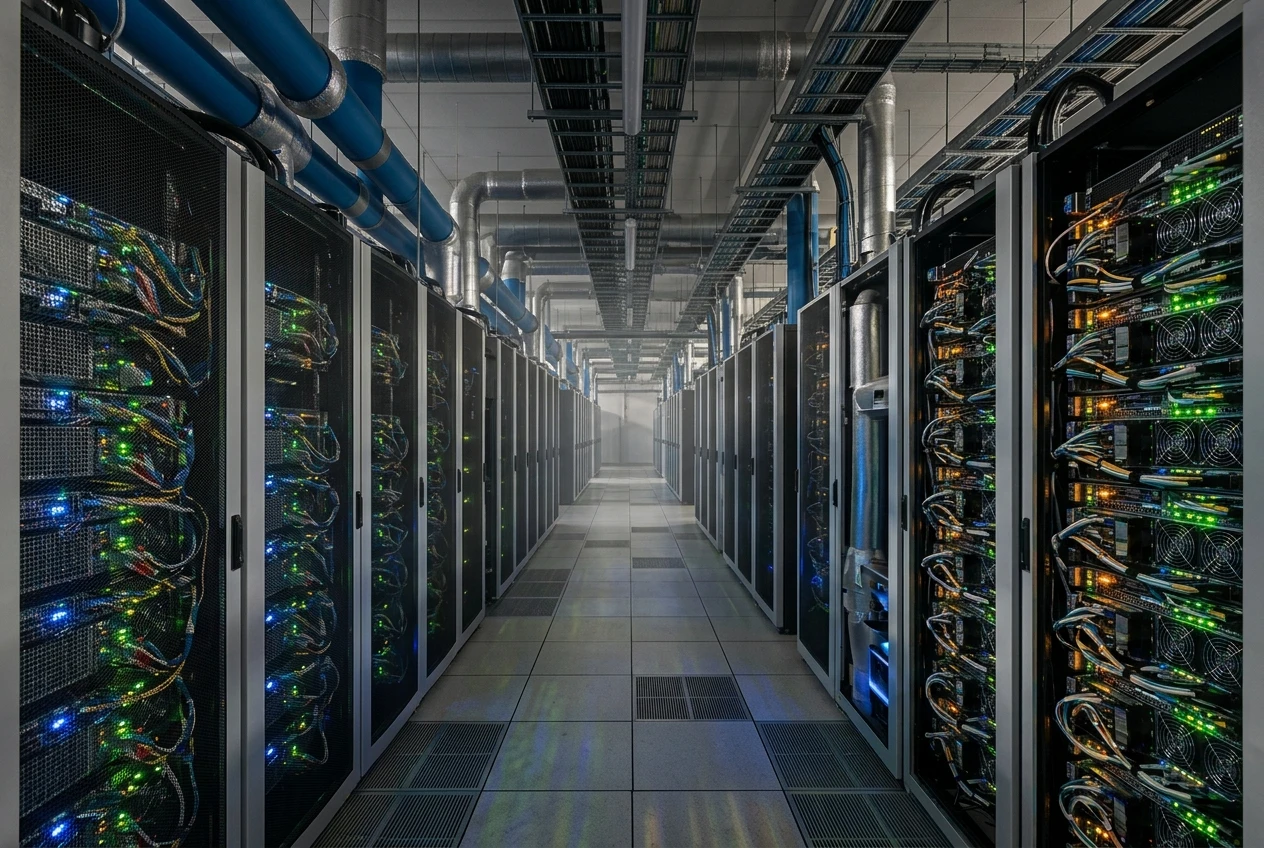
GPU serving is the obvious cost lever. Batch inference on GPUs is efficient; single-transaction, sub-100-millisecond inference on GPUs is a harder engineering problem, often requiring model distillation, quantization, or specialized serving frameworks (TensorRT, ONNX Runtime, Triton) to hit latency targets without accumulating GPU cost at scale. Teams that skip this step often discover that a neural model which looked fast in testing becomes a throughput bottleneck the moment real transaction volume hits it, because the test environment never modeled concurrent request load correctly.
There’s also a hybrid path worth naming directly: many production systems run gradient boosting as a fast first pass that clears the majority of clean transactions in single-digit milliseconds, and route only the ambiguous middle band, the transactions that don’t clearly look safe or clearly look fraudulent, to a heavier neural model for a second opinion. This tiered approach captures most of the relational and sequential signal the neural model offers without paying its latency cost on every single transaction. It’s a more honest engineering answer than treating the decision as binary.
Infrastructure choices here also connect to where the models and feature stores physically run. Teams evaluating cloud providers for this kind of real-time, high-throughput workload should weigh the same reliability and data residency questions covered in this guide to cloud providers for financial data security.
Explainability under regulatory scrutiny
A declined transaction, a frozen account, or a flagged wire triggers a question that has legal weight behind it: why did the model make this decision. Regulations including the Equal Credit Opportunity Act in the US and GDPR’s provisions on automated decision-making in the EU create a real obligation to produce a reason, not just a confidence score.

Gradient boosting and logistic regression make this comparatively tractable. SHAP and LIME produce feature-level attributions that map onto language a compliance officer can defend: “flagged due to transaction velocity exceeding the customer’s 90-day baseline by 400 percent, combined with a new shipping address.” That’s a sentence an auditor can evaluate.
Transformers and GNNs are harder to explain in that same register. Attention weights in a transformer show which parts of the input the model weighted most heavily, but that’s not the same as a causal, auditable reason. A GNN’s score depends on the state of a graph that may include dozens of connected entities, making a one-sentence justification genuinely difficult to produce without additional tooling built specifically for that purpose.
This doesn’t rule neural architectures out of regulated fraud detection, but it does mean the explainability layer has to be budgeted as its own workstream, not an afterthought bolted on before an audit. Teams running AML programs under similar scrutiny have already had to solve adjacent versions of this problem, documented in why static AML rules miss sophisticated money laundering and how machine learning catches it. The same discipline, treating model explainability as a compliance deliverable with its own design requirements, applies directly here.
False positive rates and model drift once the system is live
A model’s false positive rate at launch is not its false positive rate six months later. Fraud patterns shift as fraudsters adapt specifically to whatever is currently catching them, and legitimate customer behavior shifts too: new payment methods, new device types, seasonal spending changes. Both model families drift, but they drift differently and need different monitoring.

Gradient boosting models tend to drift in a way that’s visible in feature distributions. If the model starts flagging more transactions from a particular merchant category or device type, that shows up clearly in feature-level monitoring, and the fix is usually a retrain on recent data.
Neural architectures, particularly sequence models and GNNs, can drift in less visible ways because the failure mode isn’t always traceable to a single feature. A sequence model trained on a pattern of fraud that has since changed tactics may degrade gradually without an obvious trigger in any one input. This makes ongoing monitoring, not just initial validation, a load-bearing part of the architecture decision. A team that cannot commit to the monitoring infrastructure a neural model needs is better served by a traditional model that degrades more predictably and is cheaper to retrain on a tight cadence.
False positive drift has a direct cost beyond fraud losses: customer friction. Every legitimate transaction incorrectly declined is a customer who may abandon the purchase or the platform. That cost should sit in the same evaluation as detection rate, and it argues for conservative threshold-setting and close monitoring regardless of which architecture is chosen.
A decision framework for choosing between the two approaches
Put plainly, the choice comes down to a handful of concrete questions a team should be able to answer before building or buying:
- Transaction volume and history depth. Sequence models and GNNs need enough per-customer history and enough graph density to produce a signal advantage. Below a certain volume, that advantage doesn’t materialize.
- Latency budget. If the authorization window is tight and throughput is high, a tiered architecture with gradient boosting as the first pass is usually the pragmatic answer, with neural models reserved for the ambiguous middle band.
- Regulatory exposure. Lending decisions, account freezes, and anything subject to adverse action requirements need a model whose decisions are explainable in plain language, which favors gradient boosting and logistic regression unless a dedicated explainability layer is built for the neural model.
- Fraud typology. If the dominant fraud pattern is relational, rings, mule networks, synthetic identity clusters, a GNN addresses a gap that no amount of feature engineering on a flat model fully closes.
- Operational capacity. Neural architectures require MLOps maturity: monitoring for subtle drift, GPU serving infrastructure, and a team that can maintain it. An honest assessment of current capacity should weigh as heavily as the model’s theoretical ceiling.
For most teams, the answer isn’t “replace gradient boosting with a transformer.” It’s a layered system where traditional ML handles the bulk of traffic fast and cheap, and a neural architecture, usually a GNN for relational fraud or a sequence model for account takeover, is applied selectively where its specific strength closes a gap the simpler model can’t.
If this evaluation points toward buying a fraud detection platform rather than building one in-house, run any vendor through the risk framework in how to vet a fintech vendor before you sign before signing anything.